Serving Nationwide
Section 30C EV Charging Cost Segregation and Qualified-Basis
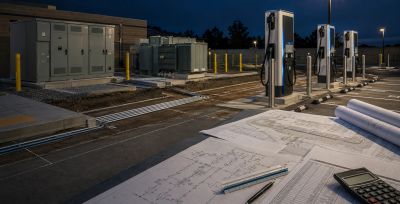
Audit-Defensible Cost Analysis for Completed EV Charging Projects
The Section 30C Alternative Fuel Vehicle Refueling Property Credit requires more than identifying the cost of the charging units.
Commercial projects may contain charging equipment, transformers, switchgear, distribution panels, conduit, wiring, civil work, networking, controls, engineering, permitting, development costs, and shared infrastructure serving multiple charging ports.
A defensible analysis must determine:
- Which costs constitute qualifying Section 30C property
- Which costs are directly attributable and traceable to individual charging ports
- How shared infrastructure should be allocated among multiple ports
- Which costs are not eligible for the credit
- How the credit reduces the owner’s depreciable basis
- How the remaining basis should be classified under MACRS
Continuing Need for Section 30C Studies
Section 30C generally applies to qualifying property placed in service on or before June 30, 2026.
Project owners may continue to require qualified-basis studies while completing current-year tax returns, IRS pre-filing registration, credit-transfer transactions, purchaser due diligence, and depreciation schedules.
Our work is limited to completed qualifying projects. It does not suggest that Section 30C remains available for property placed in service after the statutory cutoff.
Port-by-Port Qualified-Basis Analysis
For commercial EV charging property, each qualifying charging port is generally treated as a separate item for purposes of the credit limitation.
The study may allocate to each port:
- Charging unit and connector costs
- Pedestals, mounting systems, and equipment pads
- Dedicated transformers and switchgear
- Panels, conduit, wiring, and distribution equipment
- Charging-dedicated trenching and civil work
- Network hardware, metering, and load-management controls
- A reasonable share of common charging infrastructure
- Properly supported engineering and installation costs
A port-level schedule may identify the manufacturer, model, serial number, physical location, direct cost, allocated shared cost, qualified basis, and applicable credit limitation.
Shared Infrastructure
Electrical and civil infrastructure frequently supports more than one charging port. Those costs should not be assigned using an unsupported percentage.
The allocation may consider:
- Number of simultaneously operating ports
- Rated charging capacity
- Electrical load served
- Equipment configuration
- Dedicated versus mixed use
- Conduit and trench routing
- Actual construction quantities
- Engineering design and cost relationships
The selected allocation method must be reasonable, reproducible, and reconciled to the project’s capitalized costs.
Indirect and Development Costs
Engineering, permitting, construction management, development fees, and other indirect costs require specific documentation.
Support may include:
- Executed agreements
- Detailed invoices
- General-ledger entries
- Payment records
- Personnel and service descriptions
- Dates of performance
- Allocation to the assets supported
- Evidence of commercial reasonableness
- Related-party ownership information
Formation of a separate development entity does not automatically establish qualified basis. Related-party development charges are evaluated according to the services performed, accounting evidence, capitalization treatment, and relationship to the qualifying charging property.
Financing, tax-credit monetization, entity formation, lease acquisition, marketing, and other transaction-related activities are not automatically incorporated into Section 30C basis.
Eligible Census Tract
The charging property must be located within an eligible low-income or non-urban Census Tract.
The determination should be based on the actual location of the installed charging property and the applicable 11-digit Census Tract GEOID—not solely on a mailing address, city name, or general characterization of the surrounding area.
A property may be situated within a metropolitan area and still fall within an eligible Census Tract. Conversely, a project in a less densely populated area should not be assumed eligible without verification.
Placed-in-Service Documentation
For current Section 30C assignments, the exact placed-in-service date is critical.
Supporting evidence may include:
- Commissioning and acceptance reports
- Utility energization records
- Network activation
- Initial charging transactions
- Operational testing
- Final inspection records
- Confirmation that the property was ready and available for its intended use
Projects activated in phases may require separate placed-in-service determinations for different charging units or port groups.
Prevailing Wage and Apprenticeship
The business credit is generally 6% of qualified cost. A 30% rate may apply when the applicable prevailing-wage and apprenticeship requirements are satisfied or another statutory exception applies.
Our cost study may calculate the qualified basis under the rate confirmed by the client’s CPA or tax counsel. Verification of labor-law compliance is outside the cost-segregation scope unless separately engaged.
Post-Credit Depreciable Basis
The owner’s depreciable basis is reduced by the full amount of the Section 30C credit allowed.
After determining the credit-related reduction, the study classifies the remaining basis into the appropriate MACRS recovery periods. Section 30C eligibility and MACRS classification are analyzed separately; credit eligibility does not by itself determine an asset’s depreciation life.
Scope Limitations
The engagement does not provide:
- A legal opinion on tax-credit eligibility
- Certification of prevailing-wage or apprenticeship compliance
- Credit-transfer registration or tax-return preparation
- An economic-feasibility or investment-return study
- A projection of charging revenue or utilization
- A guarantee that the IRS will accept the claimed credit
The study provides an independent, documentation-based allocation of project costs for coordination with the owner’s CPA and tax counsel.
Information Needed for a Preliminary Review
Please provide:
- Project address and charging-equipment coordinates
- Exact placed-in-service date
- Number and type of charging ports
- Legal and tax owner of the equipment
- Total capitalized project cost
- Construction and EPC agreements
- Detailed job-cost and general-ledger records
- Equipment invoices and schedules
- Electrical and civil plans
- Development-fee documentation
- Ground or site lease, if applicable
- Project photographs
- Contact information for the advising CPA or tax counsel
Nationwide Section 30C Project Review
We accept selected Section 30C cost-basis and post-credit depreciation assignments for qualifying EV charging projects placed in service on or before June 30, 2026.
The work is structured for owners, developers, project entities, CPAs, tax counsel, and credit purchasers requiring supportable cost allocations under heightened documentation and audit scrutiny.
Request a Preliminary Section 30C Review
David Hahn, ASA, CVA, CCIM, CM&AA, MAFF, MBA
213-251-2400