Advanced Cost Segregation for Complex Properties & Infrastructure
100% Bonus Depreciation & asset life Classifications
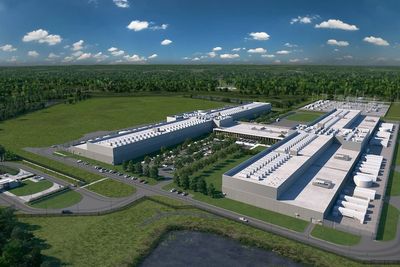
Accelerated Capital Recovery Through Defensible Asset Classification
100% Bonus Depreciation allows qualifying assets to be fully expensed in the year placed in service, creating an immediate and powerful improvement in after-tax cash flow.
But bonus depreciation is not a tax loophole.
It is the result of proper asset classification grounded in economic function and IRS-aligned recovery lives.
With us, 100% Bonus Depreciation is treated as a capital recovery outcome, not a standalone tax strategy.
What Is 100% Bonus Depreciation?
Under current federal tax law, qualifying property with recovery lives of 20 years or less may be eligible for 100% bonus depreciation, allowing the full cost of those assets to be deducted in the year they are placed in service.
This applies to:
- 5-year property
- 7-year property
- 15-year property
And does not apply to:
- 27.5-year residential real property
- 39-year non-residential real property
Bonus depreciation does not apply to “buildings” as a whole — it applies to components within a building or infrastructure asset that have shorter economic lives.
Why Bonus Depreciation Exists
Bonus depreciation is a capital policy tool designed to:
- Encourage capital investment
- Improve early-period cash flow
- Accelerate capital recycling
- Support reinvestment and expansion
- Increase after-tax return on capital
When applied correctly, it does not distort economics — it aligns tax recovery with economic reality.
Bonus Depreciation Is Not Automatic
Most commercial properties do not qualify for bonus depreciation by default.
To legitimately access 100% bonus depreciation, assets must be:
- Identified
- Classified
- Documented
- Reconciled
- Defensible under IRS standards
This is why cost segregation and asset classification are inseparable from bonus depreciation.
How Bonus Depreciation Is Created
100% Bonus Depreciation is unlocked through:
Proper Asset Classification
Separating short- and medium-life assets from long-life real property based on:
- Function
- Permanency
- Engineering characteristics
- IRS definitions
Recovery Life Assignment
Correctly assigning assets to:
- 5-year
- 7-year
- 15-year
property lives
Basis Reconciliation
Ensuring that:
- All reclassifications reconcile to total project basis
- No “percentage-only” allocations are used
Documentation
Preparing:
- Audit-ready workpapers
- Asset-level schedules
- Classification logic aligned with IRS guidance
Why Classification Must Be Defensible
Misclassification creates tax exposure, not tax benefit.
At US Valuation, all bonus depreciation work:
- Is engineering- and appraisal-based
- Is reconciled to total capitalized cost
- Is coordinated with tax advisors
- Is prepared to withstand IRS review
Acceleration is pursued only when supported by:
Function. Law. Documentation.
Where 100% Bonus Depreciation Is Most Powerful
100% Bonus Depreciation is particularly impactful for:
- Newly acquired commercial properties
- Properties placed in service after January 20, 2025
- Industrial and manufacturing facilities
- Data centers and infrastructure assets
- Hotels and lodging properties
- Office, retail, and mixed-use assets
- Large tenant improvement programs
- Campus-style and phased developments
Bonus Depreciation & Enterprise Economics
Bonus depreciation is not about tax savings alone.
It directly affects:
- After-tax cash flow
- Capital recovery timing
- Internal rate of return (IRR)
- Reinvestment capacity
- Enterprise value
In enterprise and infrastructure valuation, after-tax economics drive value — and bonus depreciation is one of the few mechanisms that can materially shift after-tax outcomes immediately.
We do:
We do not sell bonus depreciation.
We govern the asset classification discipline that makes it legitimate.
Our work is distinguished by:
- Engineering-appraisal-based methodology
- Full reconciliation to project basis
- IRS-aligned documentation
- Coordination with CPAs and tax counsel
- Enterprise-level capital recovery perspective
When to Evaluate Bonus Depreciation
You should consider a bonus depreciation feasibility review when:
- A property is newly acquired
- A property is placed in service
- A major renovation is completed
- A cost segregation study has never been performed
- A prior study lacked documentation
- After-tax cash flow optimization is a capital priority
Begin With a Feasibility Review
We offer a no-fee preliminary feasibility review to determine:
- Whether 100% bonus depreciation is applicable
- Which asset classes may qualify
- Whether a defensible study is warranted
👉 Request a 100% Bonus Depreciation Feasibility Review