Advanced Cost Segregation for Complex Properties & Infrastructure
Qualified Production Property (QPP)
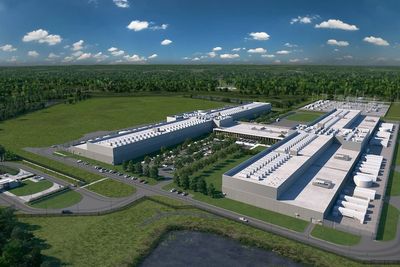
100% Expensing for Domestic Manufacturing Under IRC §168(n)
Qualified Production Property (QPP) is one of the most powerful — and most misunderstood — capital recovery provisions available to U.S. manufacturing and production facilities.
Under IRC §168(n), eligible taxpayers may elect to claim an immediate 100% depreciation deduction on qualifying portions of certain domestic nonresidential real property that would otherwise be depreciated over 39 years.
QPP is not treated as a tax incentive.
It is treated as a capital classification and enterprise-risk discipline — where eligibility, timing, and operational readiness determine whether accelerated recovery is legitimate or exposed.
Cost Segregation, QPP, and Capital Discipline
Why Production — Not Construction — Determines Economic Eligibility
Cost segregation is often framed narrowly as a tax optimization exercise.
For capital-intensive assets across manufacturing, infrastructure, energy, and industrial sectors, that framing is incomplete.
Under current law, 100% bonus depreciation under IRC §168(k) is permanent for qualified property.
By contrast, Qualified Production Property (QPP) eligibility expires on December 31, 2028 — and, critically, QPP applicability is narrow, conditional, and frequently misunderstood.
That distinction matters across all asset-heavy sectors.
QPP Is Not a Facility-Wide Election
QPP does not apply automatically to an entire facility, plant, or building.
Only portions of property directly integral to qualified production activities may qualify.
Areas devoted to:
- administration
- offices
- research and development
- storage and warehousing
- logistics
- non-production support functions
do not qualify.
In practice, QPP applies only to specific, well-defined production-driven components of a facility — often a limited subset of total capital investment.
Treating QPP as a blanket, facility-wide classification is not aggressive tax planning.
It is a material exposure position.
Built but Not Productive: The Hidden QPP Risk
Across industries — manufacturing, infrastructure, energy, and industrial facilities — projects are frequently constructed but not fully productive due to:
- delayed commissioning
- regulatory or permitting delays
- supply-chain disruption
- utility, feedstock, or power availability constraints
- demand ramp-up shortfalls
For QPP purposes, the 10-year qualified-use requirement does not pause because operations are delayed.
If qualified production use does not materialize — or is materially deferred — the accelerated deduction becomes exposed to recapture risk.
An asset may be placed in service for tax purposes yet never become productive in enterprise terms.
That gap is where capital risk accumulates.
Why Most Industries Rely More on 100% Bonus Depreciation
Because of QPP’s narrow scope and operational-use risk, most capital-intensive projects rely far more heavily on 100% bonus depreciation for assets that directly drive enterprise economics, including:
- machinery and production equipment
- process systems and dedicated infrastructure
- electrical, mechanical, and control systems
- automation and integrated production systems
- qualified improvement property (QIP)
These assets — not the building shell — typically represent the majority of capital at risk and are substantially less exposed to ambiguity regarding qualified production use.
Capital Discipline Before Irreversibility
When cost segregation is integrated with:
- valuation
- capital staging
- operational readiness analysis
it becomes a tool for capital discipline, not merely tax acceleration.
Across industries, the real risk is not failing to maximize deductions.
The real risk is misclassifying capital before irreversibility.
Because:
Production — not construction — ultimately determines whether capital ever becomes economically productive.
Our QPP Approach
Engineering-Informed | Appraisal-Disciplined | Tax-Advisor Aligned
At US Valuation, QPP engagements emphasize:
- functional production boundary mapping
- conservative scope definition
- reconciliation to total project basis
- coordination with tax advisors before elections
- documentation designed for audit and recapture defense
We do not promote facility-wide claims.
We govern defensible production-linked classification.
Timing Matters
Qualified Production Property eligibility expires on December 31, 2028.
Capital classification decisions made today determine whether that window is:
- preserved
or - permanently lost
Bottom Line
QPP is not a real estate incentive.
It is a production-linked capital recovery tool that can materially change after-tax enterprise economics — but only when production, timing, and operational readiness are real.
Request a QPP Feasibility Discussion
If your project involves domestic production and falls within the statutory window, QPP may represent a significant expensing opportunity.
We invite a feasibility discussion with you and your tax advisor to evaluate scope, eligibility, and defensibility.