Advanced Cost Segregation for Complex Properties & Infrastructure
1031 Basis & Cost Segregation
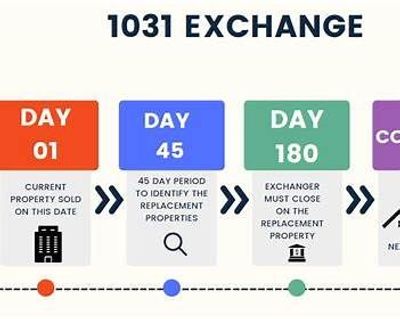
Capital Continuity & Depreciation Integrity for Exchange Properties
Cost segregation performed on properties acquired through a Section 1031 like-kind exchange is fundamentally different from a standard acquisition.
In a 1031 exchange, the tax basis is not simply the purchase price.
It is a blended, deferred, and reallocated capital structure that must be correctly established before any depreciation classification can be performed.
We treat 1031 cost segregation as a discipline of basis establishment, capital continuity, and defensible capital recovery—not as a routine depreciation study.
Why 1031 Cost Segregation Is Structurally Different
A 1031 exchange commonly introduces:
- Carryover basis from the relinquished property
- Embedded deferred gain
- Boot, cash, and debt adjustments
- Multiple layers of historical and new capital
- Frequently revised land and improvement allocations
- Prior depreciation schedules and, in some cases, prior cost segregation layers
Cost segregation cannot be performed correctly until the newly adjusted tax basis is properly established and reconciled.
This is where generic cost segregation approaches often break:
they start with asset classification before confirming basis integrity.
Our Standard Basis Establishment Protocol
Tax Advisor First. Basis Integrity Always.
A defensible 1031 cost segregation engagement begins with one governing requirement:
We request the client’s newly adjusted tax basis first.
As a standard practice, we ask the client (or the client’s tax advisor) to provide the newly adjusted tax basis and supporting basis schedules for the replacement property.
This ensures:
- Alignment with the client’s tax reporting positions
- Consistency across depreciation schedules and filed returns
- Correct integration of carryover basis, deferred gain, and boot adjustments
- Preservation of exchange integrity and audit trail continuity
We do not “guess” basis. We anchor our work to tax reality.
Land Abstraction Based on Adjusted Basis
Percentage-Based Residual Land Allocation Applied Correctly
Once the adjusted tax basis is confirmed, we abstract non-depreciable land using a valuation-based residual land percentage approach—applied to the adjusted basis, not the unadjusted purchase price.
This distinction is critical because:
- In a 1031 exchange, purchase price often differs materially from tax basis
- Land must be abstracted from the correct capital base
- Improper land abstraction distorts depreciation allocations and audit defensibility
By applying land allocation logic to the adjusted basis, we ensure depreciation is applied only to properly depreciable capital.
When Tax Advisor Input Is Not Available
We Offer Basis Review Through Prior Return Analysis
If the client’s tax advisor cannot provide adjusted basis in a timely manner, we offer a structured basis review as part of our engagement to support defensible cost segregation.
This may include review of:
- Prior tax returns (including depreciation schedules)
- Relinquished property history and accumulated depreciation
- Capital improvement records and disposition history
- Replacement property closing information and post-exchange improvement costs
The objective is to reconstruct and reconcile basis for internal consistency and defensible allocation.
Final tax positions remain subject to the client’s tax advisor approval.
Layered Capital Tracking
Preserving Capital Continuity Across Basis Layers
1031 properties often contain multiple basis layers that must be identified and preserved, including:
- Carryover basis from relinquished property
- New capital invested at exchange (including boot/cash)
- Improvement phases after acquisition
- Subsequent retrofit, retooling, or expansion costs
We separate and track these layers to prevent:
- Double depreciation
- Omitted basis
- Distorted recovery lives
- Broken audit trails
IRS-Defensible Documentation
Our 1031 cost segregation work is structured for:
- IRS examination readiness
- CPA review and audit scrutiny
- Transactional due diligence
- Long-term defensibility across future exchanges or dispositions
Every engagement emphasizes:
- Transparent classification logic tied to function and evidence
- Full reconciliation to total project basis
- Conservative interpretation aligned with IRS guidance
- Documentation suitable for Forms 3115 and related filings
Acceleration is pursued only when supported by function, documentation, and law.
Professional Foundation in 1031 Exchange Taxation
Our 1031 basis and cost segregation practice is grounded in both applied valuation work and formal education in the federal tax implications of real estate investment.
The principal has:
- Completed CCIM Institute coursework in federal taxation as it relates to investment real estate
- Completed a dedicated CCIM course on Section 1031 exchanges
- Taught multiple accredited 15-hour continuing education courses focused on 1031 exchanges
- Applied 1031 principles repeatedly in cost segregation, valuation, and exchange-related basis reconstruction engagements
This combination of formal training, instructional authority, and applied practice supports disciplined execution and credible documentation.
When 1031 Basis & Cost Segregation Is Most Valuable
- Immediately after acquisition of the replacement property
- When relinquished property had no prior cost segregation
- When post-exchange improvements are significant
- For portfolio roll-ups using multiple exchanges
- Prior to refinancing, recapitalization, or sale planning
- Before subsequent 1031 dispositions (to preserve future continuity)
Bottom Line
Cost segregation for 1031 exchange properties is not a tax shortcut.
It is a basis establishment and capital allocation discipline requiring valuation and appraisal rigor.
At US Valuation, 1031 Basis & Cost Segregation is performed with:
- Tax advisor coordination as the primary protocol
- Basis integrity and capital continuity logic
- Residual land abstraction applied to adjusted basis
- IRS-defensible documentation suitable for audit and due diligence
Discuss 1031 Basis & Cost Segregation Feasibility
If your property was acquired through a 1031 exchange, cost segregation may still be highly valuable—but only when the newly adjusted basis is properly established and defensible.
👉 Request a 1031 Basis & Cost Segregation Consultation